The painting appears here.
Press “Generate New Animal!”
Every animal here appears in a painting in the Art & See collection, so you always get a picture of it — with its name, its class and one fact.
Animals in art
Press the button and meet a random animal: the painting a master made of it, its name, the class it belongs to, and one fact worth knowing.
One animal, one painting of it, one fact.
The painting appears here.
Every animal here appears in a painting in the Art & See collection, so you always get a picture of it — with its name, its class and one fact.
This is a small thing done properly: a random animal, a real painting of it, and one fact you can check. No quiz, no scoring, no sign-up. Press the button, look at the picture, read the sentence, press it again.
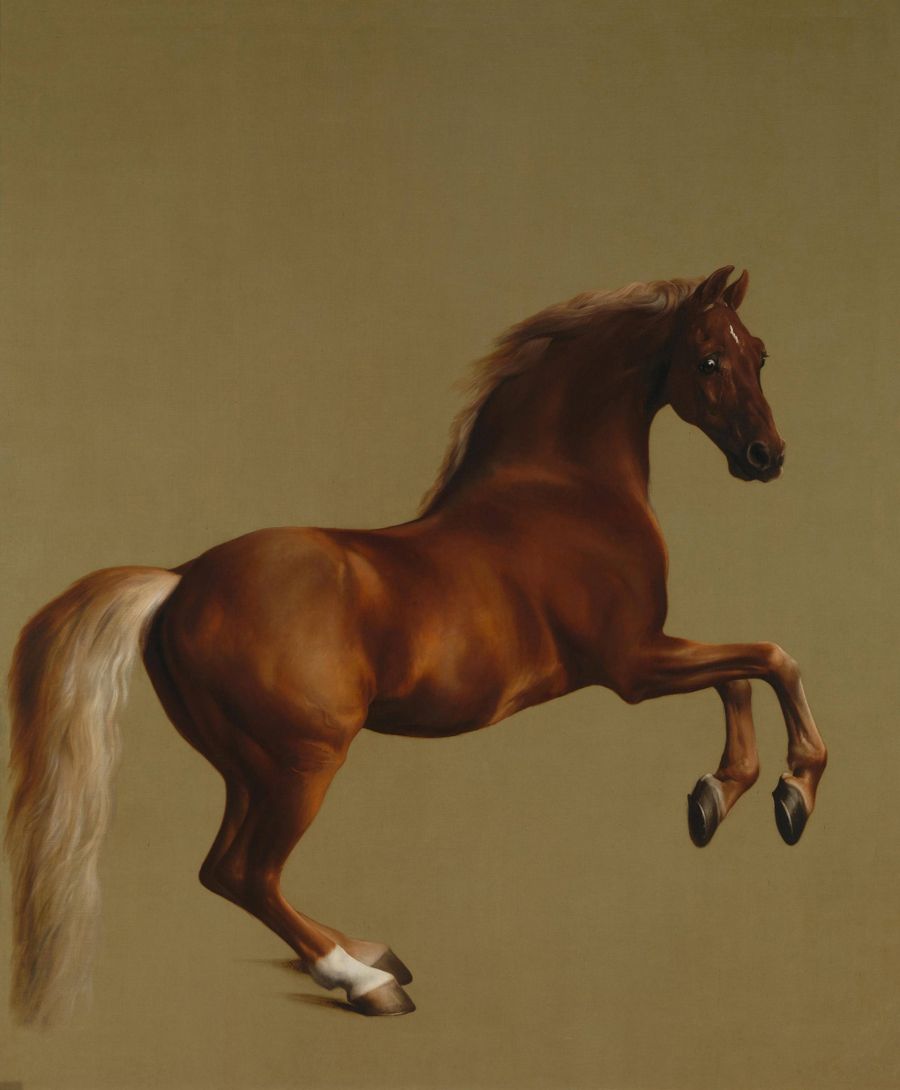
The pictures are the point. Every animal in the pool appears in a painting in the Art & See collection, so what you get is not a stock photograph but an animal as somebody looked at it: Courbet's fox in the snow, Oudry's leopard, Monet's magpie on a gate, Fabritius's goldfinch on its perch, Stubbs's Whistlejacket rearing against nothing at all. A photograph records an animal. A painting is a record of attention — of what the painter decided mattered, where the light was allowed to fall, and what was left out.
Painters earned that attention slowly. George Stubbs spent eighteen months in a Lincolnshire barn dissecting horses before publishing The Anatomy of the Horse in 1766, and every horse he painted afterwards stands on that knowledge. Jean-Baptiste Oudry painted Clara, the rhinoceros who toured Europe in the 1740s, at life size, from the animal in front of him. Dürer's Young Hare of 1502 is one animal observed until the fur reads as form turning in light. Rosa Bonheur drew at horse fairs and in slaughterhouses, and obtained a police permit to wear trousers so she could work in them.
If a painting stops you, follow the link in the caption. The whole collection of animal paintings at Art & See is worth an evening, and each one is hand-painted in oil on canvas rather than printed.
One animal at a time: a painting of it, its common name, the class it belongs to — mammal, bird, reptile, amphibian, fish or insect — and one fact about it. Press the button again for the next animal. That is the whole tool.
Every animal in the pool appears in a painting in the Art & See collection, so the picture you get is how Stubbs, Oudry, Courbet, Monet or Landseer saw that animal. The caption names the painting and the painter, and links to it if you want to see the whole canvas.
The painting is matched on the animal's common name, so it is the same animal or its close relative: a snow leopard can bring up Oudry's leopard, a polar bear can bring up Bierstadt's grizzlies. The caption always tells you what the painting actually is, so you are never guessing.
Each press is random, and the animal you have just seen is excluded, so you never get the same one twice in a row. Over a long session animals do come round again — the pool is finite.
It is free and there is no sign-up. Everything runs in your browser; the only thing the page loads is the list of paintings and the painting images themselves.
Painting
Turn any photo into a numbered grid with a color legend. Print it or download the PDF.
Color
Enter paint amounts in %, mL or fl oz and see the mixed color as HEX, RGB and CMYK.
Drawing
Describe a scene, pick a style, and get a line-art page to print and color.
Words
Titles for paintings, prints, and series, shaped by subject, mood, and style.